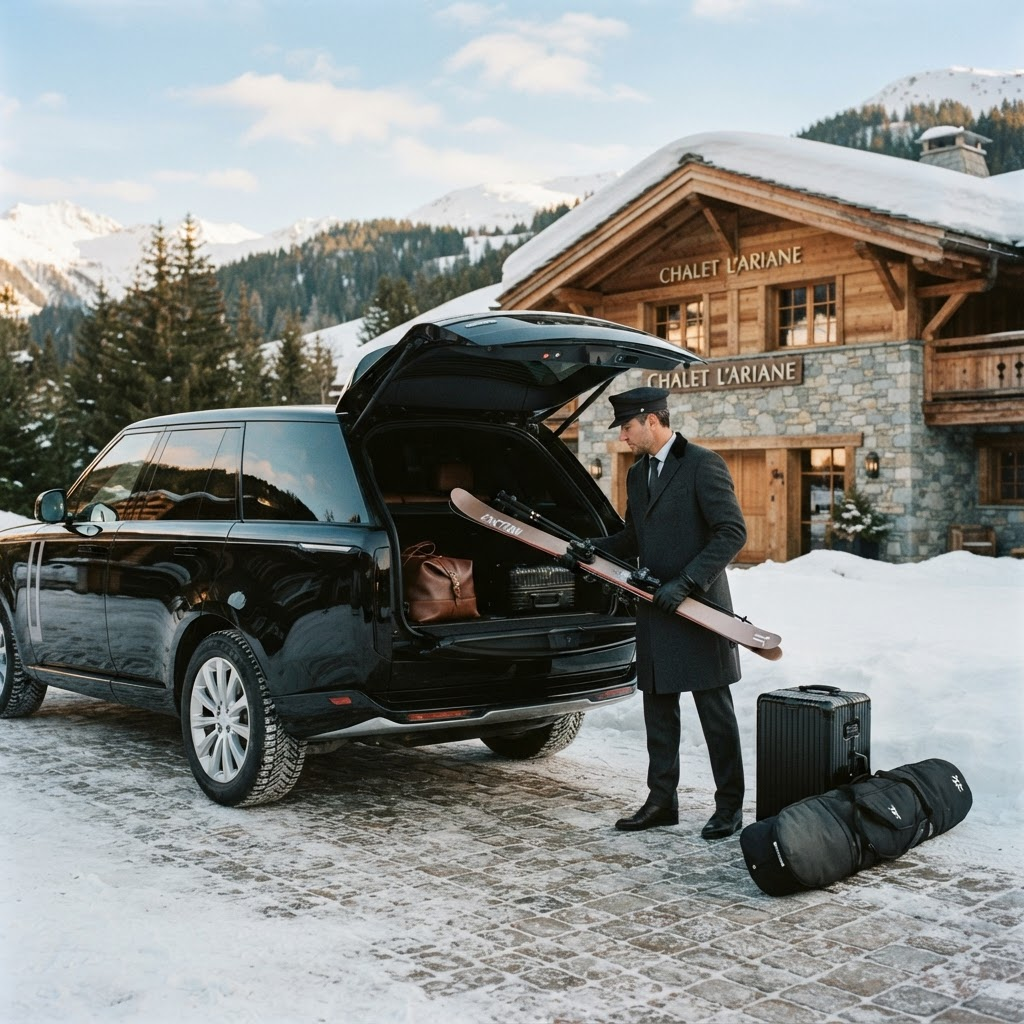
When a storm moves your arrival by three hours, the difference between a seamless transfer and a stranded party is decided long before wheels-down. Here is what happens behind the scenes.
Alpine corridors are, by definition, weather-exposed. The same peaks that make Aspen, Courchevel and Niseko worth the journey also generate the fronts that reroute your jet, close a mountain pass, or push your slot back by hours. For most ground providers, a shifted arrival is a problem discovered at the curb. For us, it is an event we are already managing while you are still in the air.
The re-stage begins with the flight, not the booking
Every confirmed transfer is bound to its tail number and flight plan, not just a clock time. From the moment your aircraft is airborne, our dispatch desk tracks its position, revised ETA and destination FBO in real time. A diversion from Eagle to Rifle, or Sapporo to Chitose, surfaces on our board the instant it is filed — often before the passenger is even notified onboard.
What actually moves
When conditions change, three things are re-staged in parallel so that none of them becomes the bottleneck:
- The vehicle and chauffeur are re-timed to the revised wheels-down, not the original booking — and repositioned to the correct FBO if the aircraft diverts.
- The mountain-side leg is re-sequenced with the local master operator so chains, road closures and resort access windows are accounted for.
- The resort or residence is notified of the new arrival window so check-in, ski valet and staff are ready when you reach the summit.
Why a single point of contact matters most in a storm
Fragmented ground transport fails precisely when the weather turns, because each vendor only sees its own leg. A curb-side sedan company does not know the pass is closed; the resort does not know your jet diverted. By unifying dispatch, aviation coordination and local operations under one desk, a three-hour delay becomes a quiet adjustment rather than a cascade of missed handoffs.
The goal is that you never feel the disruption — your chauffeur is simply there, at the right ramp, at the right time, whatever the mountain did that afternoon.
Weather is the one variable no operator can control. What we can control is whether it ever reaches you — and in a mature corridor network, it should not.
Ready to cross the pass?
Reserve a planeside-to-summit transfer on any corridor in our network.