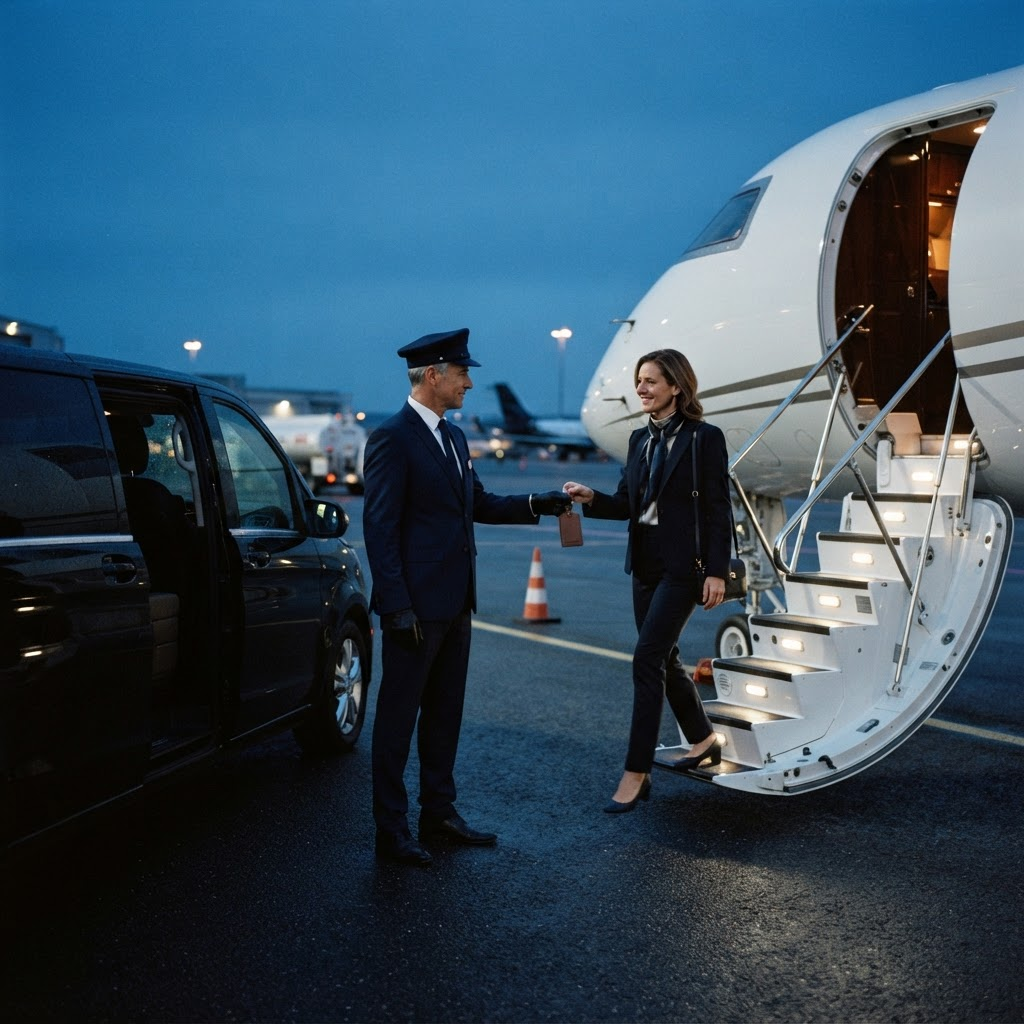
The transition from aircraft stairs to vehicle door is the most-watched ninety seconds of any private journey. For partner operators, it is also where reputations are made.
For the operators in our network, the planeside handoff is the single most consequential moment of the assignment. It is executed in full view of the principal, the flight crew and the FBO staff, and it sets the tone for everything that follows. This is the standard we hold, and the standard we expect from every master operator we work with.
Positioning and timing
- The vehicle is on the ramp and staged before the aircraft reaches the stand — never arriving after the stairs are down.
- Chauffeur out of the vehicle, in position at the base of the stairs, before the first passenger descends.
- Ramp-side authorization and escort arranged with the FBO in advance; no scrambling for access at the moment of arrival.
Presentation and conduct
- Vehicle clean, warm and correctly climate-set for the conditions before the principal boards.
- Luggage and gear handled by the chauffeur directly from the aircraft hold, verified against the manifest.
- Discretion as default — names, itineraries and identities are never discussed on the ramp or afterward.
Why the standard is non-negotiable
A principal remembers two moments most vividly: the first ninety seconds off the aircraft, and the final handoff at the residence. Everything in between can be excellent, but a fumbled planeside arrival colors the entire journey. When you operate under the TŌGE banner in your corridor, that arrival reflects on the whole network — and the network's reputation is what brings the next assignment to your door.
We do not ask operators to be faster. We ask them to be already there.
Run a corridor to this standard?
Join a flight-synced network that fills your calendar with premium, well-coordinated work.